Shakir Shah – From DIYguru’s
Introduction: Shakir Shah’s Journey from Nano 9M Program to Battery Engineer at Nexzu Mobility Shakir Shah,
Read postMaster the Intelligence Behind Modern Mobility — from Model-Based Design to AUTOSAR Integration. Gain industry-ready expertise in Advanced Modeling, ADAS, and Embedded Architecture to engineer the brains of next-generation Automotive & EV systems.
Program Highlights
From sensor perception to ECU integration — DIYguru’s ADAS & AUTOSAR Nanodegree equips you to design, simulate, and validate the intelligent systems powering autonomous and connected vehicles. Learn the tools and standards that define modern automotive software architecture.
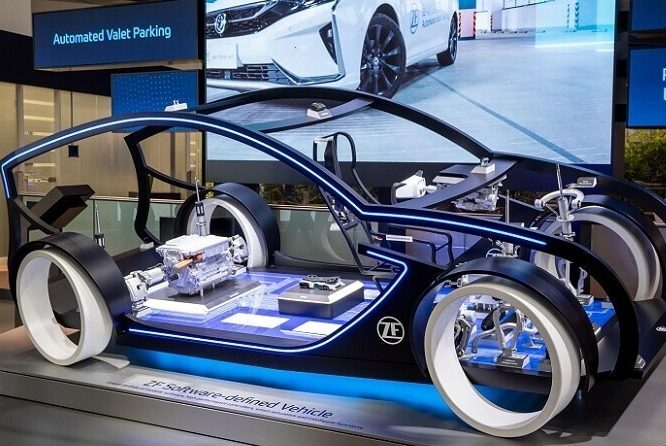
Trace the evolution from mechanical-centric vehicles to software-defined architectures (SDVs). Understand how electronics, sensors, and automation are transforming ECUs into networked computing platforms. Learn about system complexity, communication protocols, and integration challenges that define the modern automotive landscape.
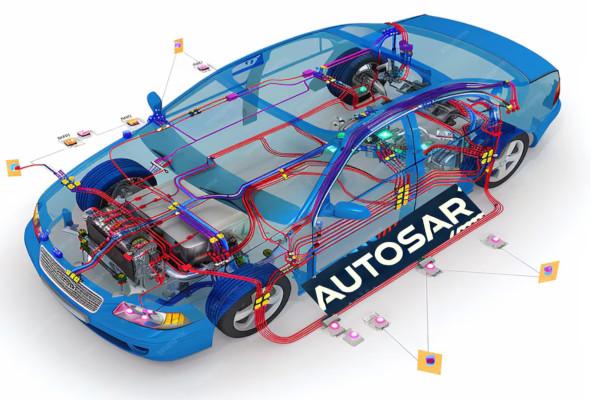
Gain in-depth knowledge of AUTOSAR Classic and Adaptive platforms, including Base Software (BSW), MCAL, RTE, and (SWCs). Work with ARXML configuration, develop components using DaVinci Configurator, EB Tresos, and perform RTE mapping and code generation. Build complete AUTOSAR-compliant software architecture project.
Dive into ADAS design and simulation using MATLAB & Simulink. Work with camera, radar, LiDAR, and ultrasonic sensors, apply data fusion techniques, and implement lane detection and object tracking algorithms. Validate your algorithms through real-world simulations using MATLAB’s Automated Driving Toolbox and deliver a Lane Departure Warning System as your capstone project.
Whether you’re an embedded engineer expanding into ADAS development or a software developer transitioning to automotive systems, this nanodegree offers modular learning paths — from SDV fundamentals and AUTOSAR integration to full ADAS project execution — enabling hands-on mastery at your own pace.
Get access to 1:1 mentorship, live project reviews, and code troubleshooting from experienced engineers in AUTOSAR and ADAS development. Our support team ensures your progress stays on track from your first simulation model to certification-ready software deployment.
Optional for those who lack embedded and STM32 know how. To ensure that the firmware development learning goes alongwith the live classes, we deliver the kit at your doorstep.
Program Outcomes
By the end of the ADAS & AUTOSAR Advanced Automotive Software Nanodegree, you will be able to:
configure, develop, and integrate software components (SWCs), RTE, and BSW modules using industry tools like DaVinci Configurator and EB Tresos.
design lane detection, object tracking, and path prediction systems using MATLAB & Simulink, integrating real-world sensor data (camera, radar, LiDAR, ultrasonic).
apply model-based design (MBD) workflows, run Software-in-the-Loop (SIL) and Hardware-in-the-Loop (HIL) tests, and analyze performance in MATLAB’s Automated Driving Toolbox.
interpret system complexity, communication protocols (CAN, LIN, Ethernet), and ECU-level integration to build scalable, modular automotive software systems.
complete a capstone project on AUTOSAR architecture design and an ADAS simulation project, demonstrating practical readiness for roles at OEMs, Tier-1 suppliers, and tool vendors.
validate your expertise in automotive software engineering and enhance your career prospects with practical, project-based credentials recognized by leading OEMs and Tier-1 suppliers.
Software Tools
The ADAS & AUTOSAR Advanced Automotive Software Nanodegree by DIYguru equips engineers with end-to-end expertise in the design, simulation, and deployment of next-generation automotive software systems.
LTSpice enables simulation of EV power circuits including converters, inverters, and BMS electronics, helping optimize circuit efficiency and transient performance.
Vector’s AUTOSAR suite enables ECU software configuration, communication testing, and diagnostics under the AUTOSAR Classic and Adaptive platforms.
AUTOSAR Builder is used to design, configure, and validate ECU architectures following the AUTOSAR Classic/Adaptive standards for scalable, safety-compliant EV software systems.
Develop firmware for STM32 microcontrollers—the core of modern EV ECUs. Learn driver programming, communication protocols, and real-time performance tuning.
Use MATLAB for algorithm development, control logic simulation, and battery modeling. Apply analytical tools to design efficient EV powertrain and BMS systems.
Design, simulate, and validate EV control algorithms with Simulink, connecting block-level models to real-time embedded systems for testing and deployment.
Perform Quantized State System (QSS)-based simulations to analyze EV system dynamics, improve computation efficiency, and model real-time behavior under load.
Python is used for EV data analysis, telemetry, and predictive modeling — enabling automation, fault detection, and simulation workflows for BMS and powertrain systems.
Curriculum
Our DIY curriculum is designed to help automotive companies solve today’s biggest challenges.
Gain a complete understanding of EV fundamentals — ecosystem, architecture, and component integration. Learn about vehicle electrification, charging infrastructure, battery systems, and global EV policies driving e-mobility.
Master numerical calculations, hybrid system design, and heavy-vehicle electrification. Understand EV safety, powertrain sizing, and high-voltage regulatory standards shaping advanced EV manufacturing.
Learn to model, simulate, and analyze EV systems using MATLAB and Simulink. Gain practical skills in QSS and Advisor toolboxes for performance prediction and drive-cycle-based optimization.
Model advanced EV architectures with MATLAB, Simulink, and QSS. Conduct BMS modeling, energy analysis, and fault simulations for real-world performance testing.
Architecture, RTE, and software component development for automotive systems.
Develop and test driver-assistance systems through sensor fusion and ML-based modeling.
To help engineering students and professionals improve their spoken English, technical communication, and presentation confidence for interviews, meetings, and workplace interactions.
To prepare students for technical and HR interviews, resume building, online assessments, and professional workplace readiness — specifically for roles in EV, Embedded Systems, and Engineering domains.
Build cross-domain expertise in automotive software architecture, model-based design, and intelligent system simulation. Master the core technical skills that power modern ADAS, AUTOSAR, and Software-Defined Vehicle (SDV) development.
Program Benifits
Gain hands-on experience with industry-standard tools, real-world projects, and certifications that open doors to global roles in next-generation mobility engineering.
Our philosophy is simple — you get to have a team of diverse, passionate people who are willing to change the future of education in mobility industry and empowers you to do your best work.
Certifications
DIYguru certifications validate hands-on competence in Electric Vehicle technology and digital engineering. Each program blends project-based learning with industry standards, ensuring graduates demonstrate real-world skills aligned with OEMs and Tier-1 suppliers.
DIYguru is recognized under ASDC, India’s sector skill council for the automotive industry, ensuring every certified learner meets national skill standards. The certification signifies employability in EV design, diagnostics, and service roles aligned with India’s automotive skilling framework.
DIYguru programs are listed on AICTE’s National Educational Alliance for Technology (NEAT 3.0), a Government of India initiative that recognizes quality ed-tech platforms driving employability in emerging technologies.
DIYguru’s flagship Postgraduate Certification in Electric Vehicle Technology is co-certified by EICT - IIT Guwahati, ensuring every module meets the academic rigor and innovation standards of one of India’s premier engineering institutions.
DIYguru’s EV programs are officially reviewed and certified by Tata Technologies, a global leader in product engineering and digital transformation for OEMs and Tier-1 suppliers.
The DIYguru Post Graduate Program in Electric Vehicle Technology is designed for learners who want to transform their technical foundation into a career in E-Mobility, EV Design, and Advanced Automotive Engineering.
Journey
emobility.careers is DIYguru’s exclusive placement engine — connecting Nanodegree Program students with top recruiters in the EV and e-mobility ecosystem, ensuring every learner moves from classroom to career with confidence.
Get a skill-readiness score based on your course performance, projects, and industry assessments. This helps you understand your strengths and bridge gaps before you face interviews.
Your DIYguru projects, certifications, and test scores are automatically integrated into a verified digital profile. Employers can see your technical depth and practical work at a glance.
Track your applications with EV companies, schedule interviews, and receive updates — all within a single dashboard. No lost emails, no missed chances.
Every student profile is pre-validated and recommended only to matched roles, ensuring companies hire confidently and you stand out from the crowd.
emobility.careers is trusted and used by over 110+ future mobility companies
Career Opportunities
By completing industry-oriented projects — AUTOSAR-compliant architecture development and ADAS lane-departure warning simulation — participants graduate job-ready for roles in OEMs, Tier-1 suppliers, and automotive software R&D.
"DIYguru trained our teams at Bosch in 2019, right at the start of EV adoption in India, delivering far above our expectations. Since then, they have remained a trusted partner, supporting our employees with both LMS access and in-person training across EV domains."
"DIYguru graduates come with a hands-on understanding of EV systems — not just theoretical knowledge. They’re able to contribute from day one to our battery testing and pack assembly operations."
“We’ve been consistently impressed by DIYguru-trained engineers. Their grasp on battery design, EV service, repair and diagnostics helps us accelerate product deployment and reduce production time.”
“What stands out is DIYguru’s focus on simulation and hardware validation. The engineers we’ve hired adapt quickly to startup environments — confident with MATLAB, ANSYS, and embedded toolchains.” Rajat Kapoor
“The EV industry needs engineers who can think both technically and systemically — DIYguru graduates bring that balance. Their familiarity with powertrain integration and BMS testing has been a real asset.”
“DIYguru’s placement ecosystem delivers candidates who understand the complete EV lifecycle — from design and validation to service diagnostics. That readiness is what the industry truly needs right now.”
“The engineers we’ve recruited from DIYguru demonstrate excellent command over EV design tools, motor controllers, and safety protocols. Their practical exposure sets them apart from regular graduates.”
Introduction: Shakir Shah’s Journey from Nano 9M Program to Battery Engineer at Nexzu Mobility Shakir Shah,
Read post
Introduction: Aman’s Journey from Quality Executive to Quality Advisor in the EV Industry Aman Das’s transition
Read post
Background Nitin Agarwal, a Mechanical Design Engineer from Najibabad, Uttar Pradesh, has always been passionate about
Read post
Background Arti Soni, an Electrical and Electronics Engineer from Pune, India, always had a passion for
Read post"At Infineon, my focus is on advancing power electronics for electric mobility. The training I undertook at DIYguru deepened my understanding of system-level applications and gave me frameworks I could directly connect to our innovation work."
"The EV program at DIYguru strengthened my knowledge of control systems and their application in electric powertrains. It has been directly beneficial to my role at Cummins in advancing EV solutions."
"The EV Controls modules at DIYguru gave me clarity on inverter–motor interaction, torque control, and drive cycle efficiency. The structured projects mirrored real automotive use cases, which I could directly relate to my work at General Motors."
"DIYguru’s EV program provided me with a clear understanding of emerging technologies and industry trends. It has been instrumental in shaping my research and strategy work at Suzuki in the electric mobility space."
"In my work on EV battery management systems at Mercedes-Benz, I needed both depth in cell balancing strategies and clarity on integration concepts. The training at DIYguru addressed these areas with precision, adding real value to my R&D responsibilities."
"Working on electrified platforms in construction and forestry equipment demands clarity on high-voltage safety, diagnostics, and drivetrain integration. The training at DIYguru helped me bridge the gap between conventional machinery and emerging EV systems, aligning directly with John Deere’s move into hybrid and electric solutions."
"Working on EV integration projects at Hydro One required a solid understanding of charging infrastructure, grid load balancing, and V2G systems. The training I took from DIYguru bridged these areas with practical case studies, making it easier to translate concepts into real project execution."
"The EV Powertrain Integration Program at DIYguru provided me with deep insights into system-level design and practical integration. It has been highly valuable for my work in new product development at Exide"
"The Solar Integrated EV program at DIYguru gave me a strong foundation in combining renewable energy with electric mobility. The concepts and practical insights have been directly useful in my engineering role at L&T Defence."
"DIYguru transformed my career in just six months. Their comprehensive EV & Embedded Systems Nano degree equipped me with essential skills, leading to a prestigious job at Sandip University.
I’m grateful for the life-changing education and support."
"I have been a student of DIYguru PG Program of EV Technology and DIYguru has helped me in transforming my journey, consistently exceed my expectations.
Pretty good experience at hardware-enabled workshop because as a mechanical engineer, we understood the electrical part very easily."
"The knowledge and support I received from DIYguru have been invaluable. They have a deep understanding of EV and have helped me navigate complex career path with ease.
Overall DIYguru training program is very good initiative to developed better practice understanding."
Case Study
DIYguru partnered with HL Mando to deliver a comprehensive Battery Management Systems (BMS) training program, aimed
Read case study
The training spanned a total of three months, combining online and offline sessions. Each module included
Read case study
DIYguru, in collaboration with L&T Edutech, has established E-Mobility Centers of Excellence in educational institutions across
Read case study
In a groundbreaking initiative, DIYguru and Tadpole Projects, incubated at IIT Delhi, developed three innovative training
Read case study
DIYguru, in collaboration with EVI Technologies and under the mentorship of Dr. B.K. Panigrahi from IIT
Read case study
This comprehensive program covered key modules including EV basics, battery technology, electric motors, power electronics, vehicle
Read case study
The program targeted ITI students, particularly those in urban areas and Bangalore. The initiative aimed to
Read case study
The program catered to a diverse group of students from various engineering disciplines, enrolled through Internshala's
Read case study
Objectives: To provide comprehensive knowledge of hydrogen fuel cell technology. To equip participants with practical skills
Read case study
The EV training program provided by DIYguru and TCS is a comprehensive program that covers all
Read case study
Objectives: Equip veterans with the necessary skills for a successful transition into the EV industry. Provide
Read case study
The training program conducted by DIYguru enabled the engineers at Padmini VNA to gain in-depth knowledge
Read case study
The hands-on workshops were held at Honda Car India's premises, ensuring that the participants could apply
Read case study
The training program was meticulously designed to cover various aspects of Fuel Cell Technology, ensuring a
Read case study
This collaboration between DIYguru and Greaves Cotton - Ampere Electric exemplifies DIYguru's dedication to providing industry-specific
Read case study
This training initiative between DIYguru and DTICI has significantly enhanced the technical capabilities of DTICI’s team,
Read case study| Feature / USP | DIYguru | Other Platforms |
|---|---|---|
|
Industry-aligned curriculum Partner-backed Designed with real EV workforce upskilling at Hyundai, Bosch, L&T, Daimler, Sonalika, John Deere & Eaton. (See Case Studies section) |
Verified with partners | Varies; often generic |
| Hands-on labs & workshops with 3 Weeks access to 4-Wheeler Hardware & Diagnostic Labs (ev.care) Access available in Delhi • Pune • Malaysia • Saudi Arabia • Germany. |
Real hardware rigs | Limited simulators |
|
Placement engine & employer network with access to eMobility.careers dedicated job portal Portfolio, interview prep, role mapping, referrals with exclusive, EV-focused listings with role-skill mapping and recruiter access. |
EV-specific portal | Generic boards |
|
Option to choose from Government & industry certification pathways ASDC (Govt. of India) • NEAT AICTE (Ministry of Education) • IIT (Jammu/Guwahati) • TATA Technologies. |
Multiple pathways | Limited/none |
| Hybrid learning (Live + Self-paced + Hands on + Mentor hours from IITs & TATA Technologies) | Structured pathway | Video-only often |
| Certification tracks (M.Tech. > PG > Nano > Micro-credentials) | Multiple levels | Single level |
| Employer-ready portfolio, english communication classes & viva prep Templates, rubrics, code review, mock interviews day. |
Included | Occasional |
|
Embedded kit delivery to your doorstep with Capstone on real EV datasets 20+ guided experiments on batteries, chargers, sensing, and control. |
20+ experiments included | Limited kits |
| Corporate collaboration & real tools exposure through Mentor feedback loops & doubt clearing session with instant support through whatsapp groups | one to one | Community only |
| Support for working professionals (weekend cohorts, bridge modules)with outcome mapping: role-based skill tracks (BMS, Motor, EVSE, Thermal, Data) | Structured | Irregular |
| Ethics, safety & compliance embedded (ISO 26262, HV safety, AIS/BIS awareness) | Integrated | Minimal |
| Transparent skill diagnostics & KPIs with outcomes (projects → roles → salaries) | Mapped | Rare |
Note: “Other Platforms” is a generalized comparison. Actual availability may differ per provider.
The DIYguru Embedded Systems Nanodegree is a specialized 6-month industry-driven program designed to provide hands-on experience in microcontrollers, firmware development, embedded C programming, communication protocols (CAN, I2C, SPI), and real-world project integration for automotive and EV applications.
The program is open to engineering students, graduates, and professionals from Electronics, Electrical, Instrumentation, or Computer Science backgrounds who wish to upskill in embedded system design and applications in the EV sector.
Upon completion, you’ll receive a DIYguru Nanodegree Certificate co-branded with industry partners like Tata Technologies & IITs depending on the addon certification, validating your practical skills and readiness for embedded system and EV roles.
The course runs for 6 months and follows a structured learning path with live instructor-led sessions, self-paced video modules, weekly quizzes, and capstone projects focusing on STM32 microcontrollers and automotive-grade applications.
You’ll learn: Embedded C programming following MISRA standards ARM Cortex-M architecture Communication interfaces: CAN, SPI, I2C, UART RTOS basics and task scheduling STM32 development & debugging Integration with sensors and actuators Battery Management System (BMS) interface fundamentals
Yes. Every module includes hardware-based labs and simulations using STM32 boards and diagnostic tools. Learners also complete a capstone project integrating sensors and communication protocols into a real-world embedded application.
Absolutely. DIYguru provides placement assistance, career mentorship, and interview preparation. Students are also matched with hiring partners in the EV and embedded systems domains through DIYguru’s placement cell.
Graduates can pursue roles such as: Embedded Systems Engineer Firmware Developer Automotive Embedded Engineer EV Systems Integrator IoT Hardware Engineer You’ll be job-ready for positions in automotive, robotics, and IoT industries.
Yes. The Nanodegree is designed for flexibility with weekend live classes and self-paced recordings, making it ideal for working professionals looking to transition or upskill in embedded systems and automotive electronics.
Can’t find the answer you’re looking for?
Please chat to our friendly team.
Solutions
Offers a unified platform that fosters innovation while providing end-to-end data management.
Whether you have a team of 2 or 200, our shared team inboxes keep everyone on the same page and in the loop.
This powerful tool eliminates the need to leave Salesforce to get things done as I can create a custom proposal with dynamic pricing tables.
Lexend © 2025, All rights reserved.
India will create 1 crore EV jobs by 2030. Take this 5-minute assessment to discover:
Used by 50,000+ EV professionals trained by DIYguru.
Tell us where to send your detailed result + EV Career Path Guidebook (PDF). Our counselor will also guide you personally on WhatsApp.
By submitting, you agree to receive career guidance from DIYguru. Call: 9910918719
Matching you with career pathways...
50+ pages of career roadmaps, salary benchmarks & certification guidance for India's EV industry.
Course Overview & Learning Outcomes
Guidelines for Course Participation
Introduction to AUTOSAR – Definition, History, and Goals
Why AUTOSAR is Essential – Standardization Benefits, Scalability & Reusability in Automotive Applications.
Software Components and Their Roles:
Atomic Software Components
Composite Software Components
Functional Grouping & Reusability Patterns
Port-Level Interface Definitions in AUTOSAR
Sender-Receiver (SR) Communication Model – Data Exchange Principles
Client-Server (CS) Interface – Service-Oriented Communication
Connectors & Port Compositions
Practical Examples – Port-to-Port Communication Scenarios
Runnables in AUTOSAR – Execution Entities of SWCs.
Events Triggering Execution:
Time Events
Mode Switch Events
Operation Invocations
This module provides an overview of the Application Software (ASW) Layer, focusing on the design of its functional layer. It covers how various functionalities are mapped and organized into Software Components (SWCs), enabling modular and efficient software development in AUTOSAR systems.
Mapping Functionalities into SWCs
Introduction to RTE Layer – Roles.
Middleware between SWC and BSW
Sender-Receiver RTE Communication
Client-Server RTE Communication
End-to-End Communication Flow using RTE
Event Scheduling and Triggering via RTE
RTE Code Generation – AUTOSAR Builder Tools & Output Artifacts.
Engineering Approach in AUTOSAR – Top-down vs. Bottom-up Development.
AUTOSAR Methodology Workflow – System Design, Configuration, Integration.
Real-World Examples – Lifecycle of Component Development
Automotive Radar – Simulation and modeling of radar-based object detection.
Camera (Vision System) – Image acquisition and object recognition using computer vision.
Ultrasonic Sensor – Close-range object detection and parking assistance simulation.
LIDAR – 3D mapping and obstacle detection using laser-based systems.
GNSS, GPS, IMU – Integration of location and motion sensors for vehicle positioning and navigation.
Introduction – Overview of safety features that prevent or reduce collision risks
Adaptive Cruise Control (ACC) – Maintaining safe distance and speed relative to surrounding vehicles
Rear Cross Traffic Alert (RCTA) – Detecting approaching vehicles while reversing
Vehicle Exit Alert – Warning when opening doors into oncoming traffic
Front Cross Traffic Alert – Detecting vehicles approaching from the side at junctions
Forward Collision Warning – Alerting drivers of imminent front-end collisions
Vehicle Turning Assistance – Monitoring blind spots and surrounding vehicles during turns
Blind Spot Detection – Detecting vehicles in the driver’s blind zone
Lane Change Assist – Supporting safe and timely lane changes
Parking Assistance System – Automated steering and alerts during parking
Intelligent Headlight Control – Adjusting beam intensity and direction based on traffic conditions
Occupant Protection System – Pre-crash systems like airbag deployment and seatbelt tensioning
Pedestrian Protection System – Sensing and mitigating risk to pedestrians
Evasive Steering Support – Assisting in controlled steering during obstacle avoidance
This module explores advanced ADAS technologies that enhance driver awareness and vehicle stability. It covers systems like Traffic Sign Recognition, Speed Limit Assist, Lane Departure Warning, and 360° View Cameras, alongside critical safety features such as Driver Monitoring, Emergency Brake Assist, ABS, TCS, and Cross Wind Assist—all designed to improve response, control, and road safety.
Introduction – Advanced systems for environment awareness and driver support
Traffic Sign Recognition System – Detecting and interpreting road signs using vision-based systems
Speed Limit Assist – Monitoring and maintaining legal speed limits dynamically
Lane Departure Warning – Alerting drivers when unintentionally drifting out of lanes
360° Surrounding View System – Providing a bird’s-eye view for enhanced spatial awareness
Driver Monitoring System – Observing driver behavior for signs of distraction or fatigue
Driver Drowsiness Detection – Identifying early signs of driver fatigue
Emergency Brake Assist – Supporting braking when sudden obstacles are detected
Anti-lock Braking System (ABS) – Preventing wheel lock during hard braking
Traction Control System (TCS) – Maintaining vehicle stability on slippery surfaces
Cross Wind Assist – Stabilizing vehicle in strong lateral wind conditions
Training programs · B2B partnerships · College workshops